Upanayan · উপনয়ন · পৈতে
A poite venue in South Kolkata,
where the lagna decides the morning.
An upanayan venue on Rash Behari Avenue, for the poite itself — early starts, your own caterer for the feast, and nothing served that your family has not asked for.
The upanayan — উপনয়ন, and to nearly every family in Kolkata simply the পৈতে — is the thread ceremony, and it is one of the few bookings where the venue has to work around the ritual rather than the other way around.
Three things decide whether a hall can hold one properly: how early it will open, what it can do about the food, and whether anyone there has watched a homa before. This page is about those three.
The priest sets the hour, not the venue
This is the part of a poite that decides where you can hold it. The lagna is fixed by your priest and it is frequently before dawn — and a banquet hall that only really wakes up in the evening will find a polite way of saying no. So say it first when you call: tell us the date and the hour the lagna falls, and we will tell you plainly what we can arrange for that morning. The 9 AM to 9 PM on our Google profile is when you can reach us to enquire. It is not a window your ceremony has to fit inside.
Not a bigger annaprashan
Families who held a mukhe bhaat here often assume the poite is the same booking scaled up. It is not. At an annaprashan the guest of honour is six months old and sleeps through most of it, and the ritual is over in the time it takes to feed him a grain of rice. At a poite the boy is eight or ten, his head has been shaved, he is in a new dhoti, and he has to sit through a homa and perform his own part in it while a room full of relatives watches. It is longer, it is earlier, and the child in the middle of it is old enough to be self-conscious. A room that lets him get through it without an audience pressing in is worth more than decoration.
The feast is a separate question from the ceremony
In many Brahmin households the poite feast is strictly niramish, and that is a preparation question rather than a menu question — it needs raising at the first conversation, not at menu selection. Settle it with your caterer, and be specific: we do not provide catering, so the cooking and the vessels are both theirs, and for strict niramish observance the vessels matter as much as the ingredients. Choosing your own caterer is what makes that possible; a venue that imposes one cannot promise it.
Tell us what your priest needs
Every priest sets up a little differently, and the things that go wrong on the morning are almost always the small ones — where the fire sits, how much clear floor there is around it, where the women of the family stand for the bhiksha, whether there is somewhere for the boy to change. We host wedding mandaps regularly, so a fire ritual on the premises is familiar ground here. What we would rather not do is guess. Walk us through it on a call with your date in hand and none of it is a surprise at five in the morning.
Nothing will be served that you have not asked for
The venue does not hold a liquor licence. Alcohol appears at an event here only where the client has arranged the licence themselves, which for a poite is not a conversation that usually comes up at all — so nothing of the sort will be anywhere near your ceremony. There is a designated smoking area on the premises, deliberately away from the halls and the dining space, which matters when three generations of a family are in the room.
The Decision
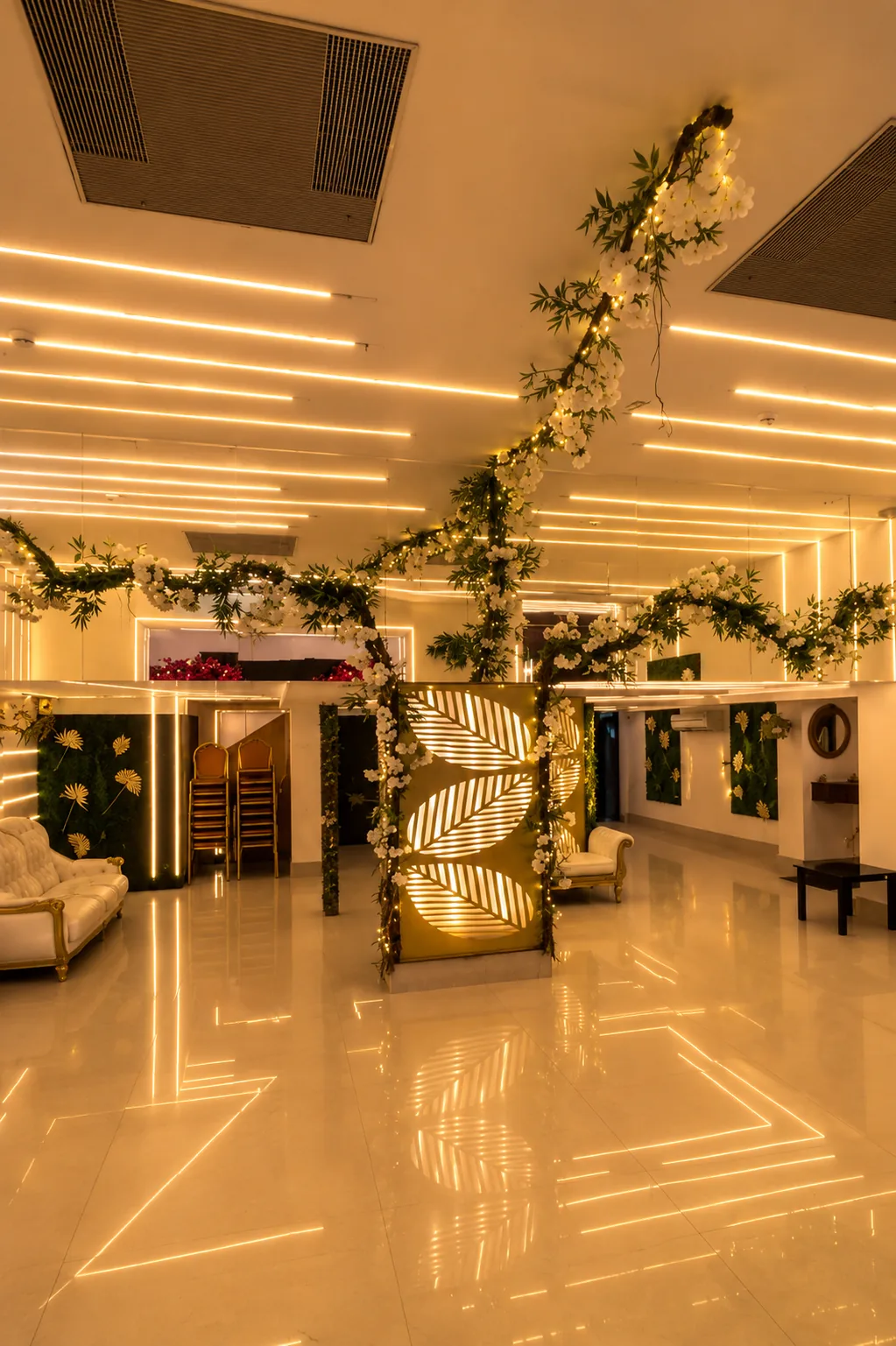
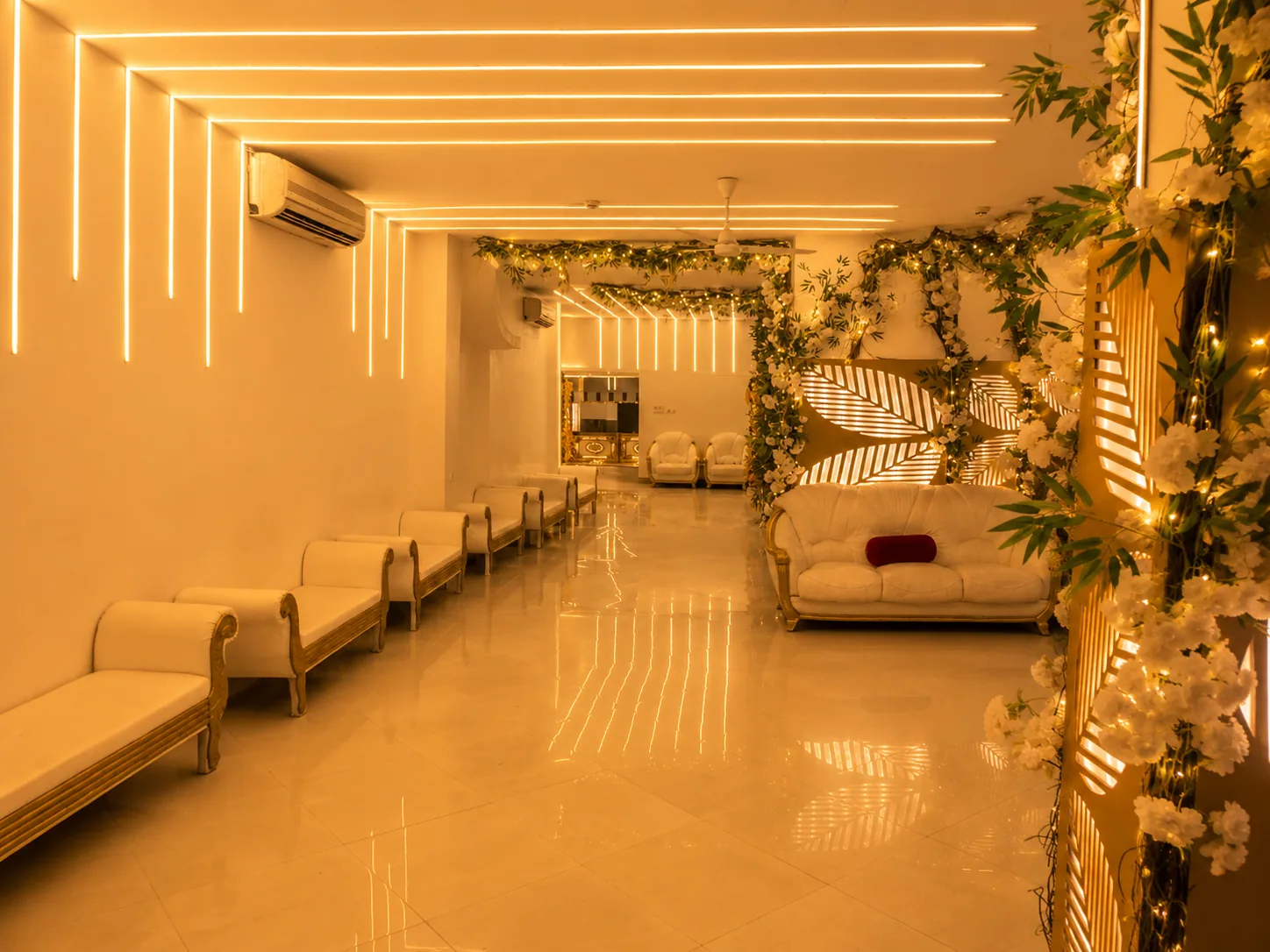
Which floor holds a poite
Questions Families Ask
Before you call
Our lagna is before sunrise. Can you open that early?
Tell us the hour when you call — it is the first thing to settle, and it is a normal request rather than an awkward one. The 9 AM to 9 PM on Google is our enquiry window, not your event's. We will confirm what we can arrange for your date.
Can the feast be entirely niramish?
Yes, and it is settled with your caterer rather than with us — we do not provide catering, and the vessels come from them too, which is the part that matters most for strict observance. Tell us what your family observes about preparation as well as ingredients and we will tell you honestly what we can arrange around it.
What does the priest need for the homa?
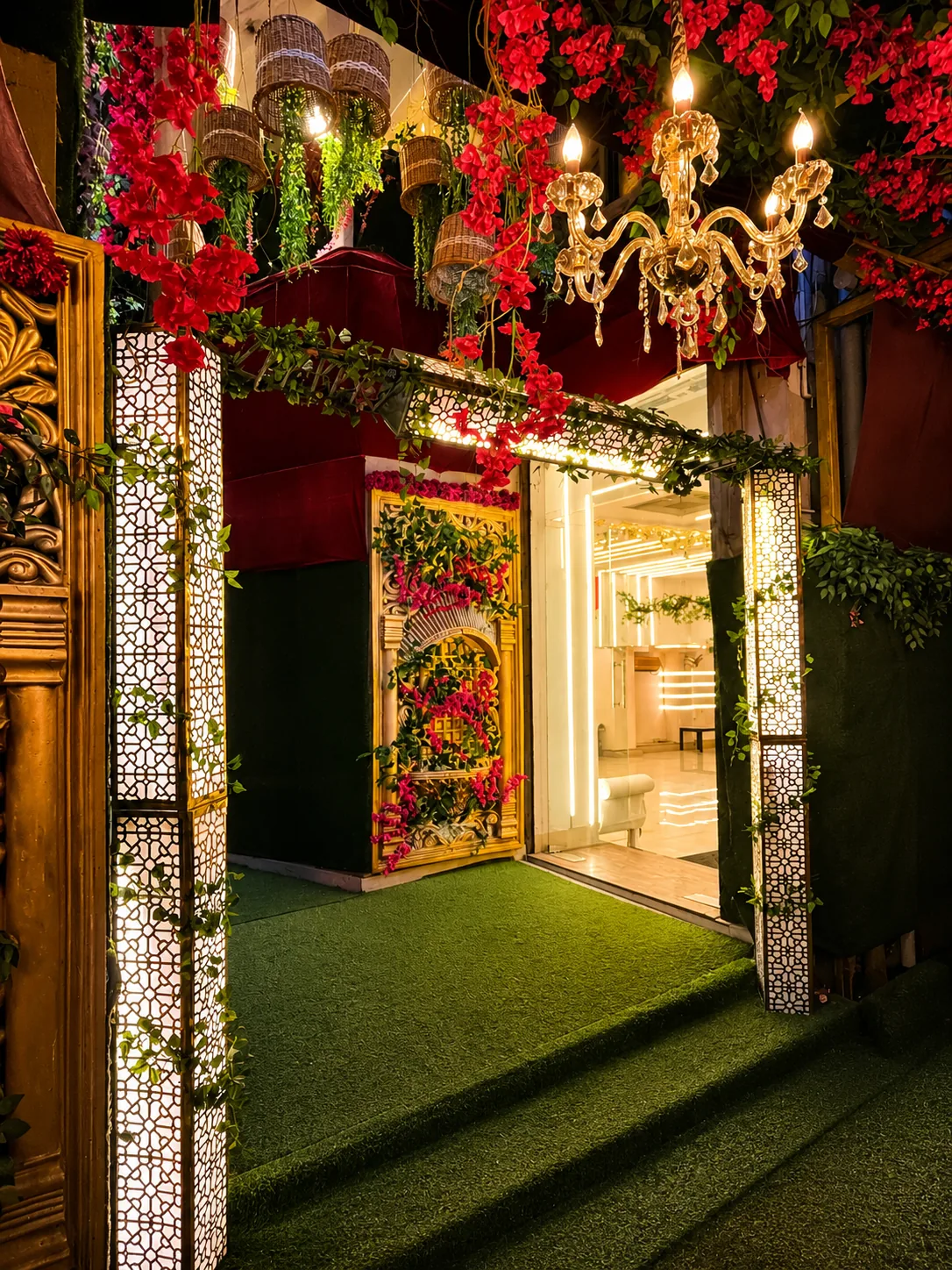
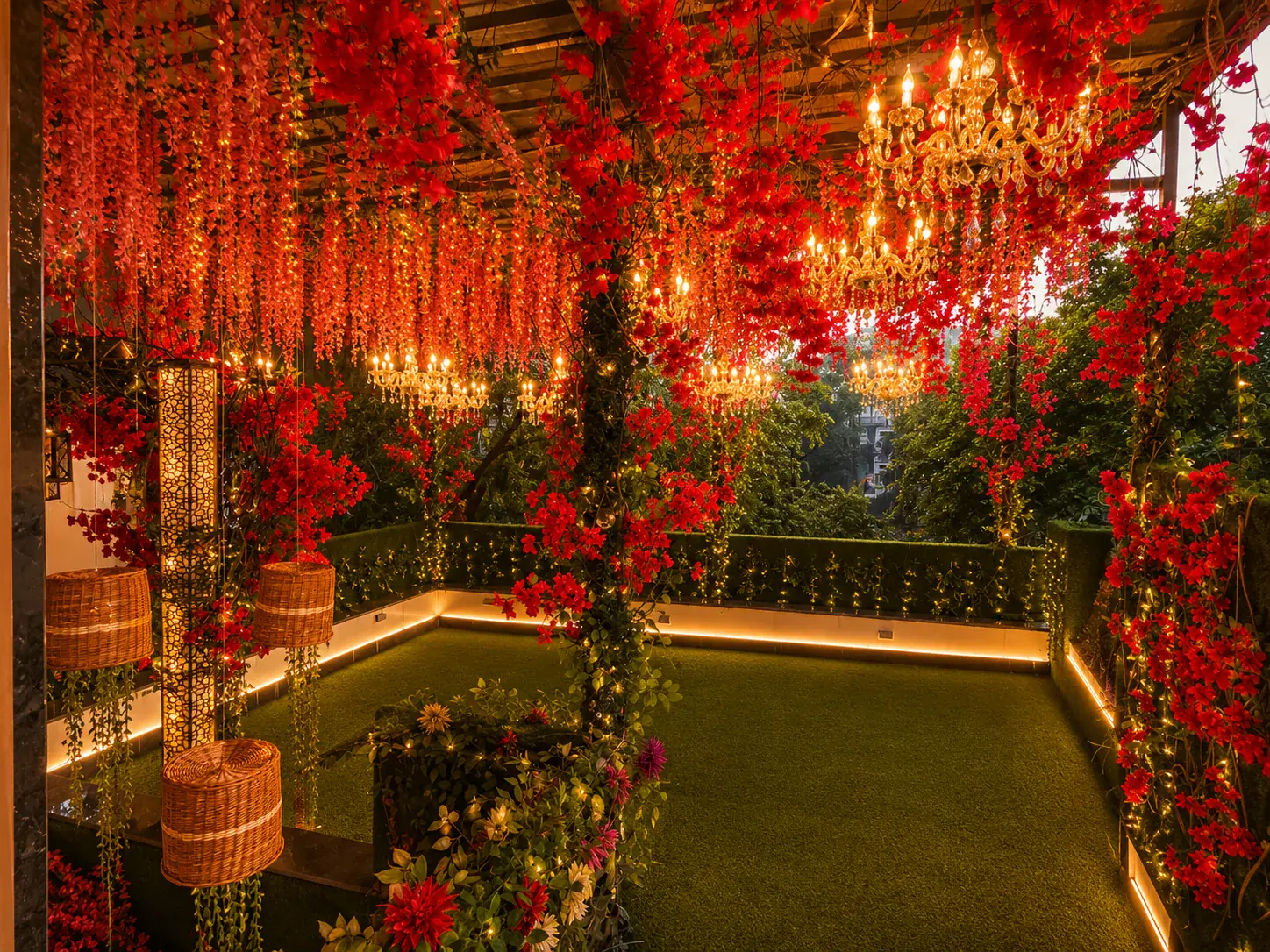
A homa can be done two ways here. On the open terrace, which is the usual choice and is arranged on a chargeable basis, or indoors, where we set up everything the ritual needs. We host wedding mandaps regularly, so a fire ritual is familiar ground. Tell us which your priest prefers and what he brings, and we will have it ready rather than improvising on the morning.
Is alcohol served at the venue?
Not unless a client arranges it. The venue holds no liquor licence of its own, so alcohol appears only at events where the client has obtained the appropriate licence. For a poite the question rarely arises, and nothing will appear at your ceremony unless you arrange it yourself. There is a designated smoking area, away from the halls.
How many guests do most poites have?
Usually extended family. The Ground Floor at 150 to 200 suits most. The Heritage Floor takes 400 to 500 if the feast is a wider invitation than the ceremony, which is common.
Can we hold the nandimukh here the day before?
Ask when you enquire. It depends on what is in the diary around your date, so it is a conversation rather than a standing policy — but families do ask, and it is better raised early than late.
What does it cost?
A poite is quoted at our celebration rate — from ₹60,000 for the Ground Floor, with catering quoted separately by your own caterer. Every floor and both tiers are published in full on our pricing page.
Tell us the lagna.
The date, the hour your priest has fixed, and how your family eats.
We will tell you honestly what we can do.